Free NTSB accident pattern matching — just send an email

StevenK

Filing Flight Plan
Joined
Mar 29, 2026
Messages
19
Display Name
StevenK
I'm a software developer (not a pilot) who lost a close friend in a small plane crash near Fort Lauderdale. I spent the past year indexing 30,000+ NTSB accident investigation records into a tool that matches your specific flight profile against real accident patterns.

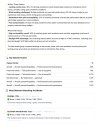
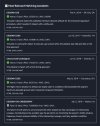
You email a flight description to [email protected] — aircraft type, route, your total hours, expected weather — and get a briefing back in about a minute with matching accidents, cause factors, fatality rates, and what to watch out for.

Example: "Cessna 172, Miami to Orlando, 250 hours, overcast with rain showers, VFR" comes back showing matching Florida spatial disorientation cases, VFR-into-IMC patterns, and the fact that night + IMC + non-instrument-rated in that corridor is almost uniformly fatal.

No account, no signup, no cost. Just an email.

I'd genuinely appreciate feedback from actual pilots — are the results useful? What's missing? What would make you trust it as part of your routine?Gmail - ✈️ Safety Briefing: Processing KFLL → KMTH.pngGmail - ✈️ Safety Briefing: Processing KFLL → KMTH.jpg
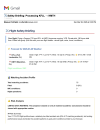
 
Last edited:
Interesting

Seems small single engine focused, compared my jet trip to a accident with a C152 going IIMC
 
Interesting

Seems small single engine focused, compared my jet trip to a accident with a C152 going IIMC
That’s really helpful — thank you.

Right now the matching is driven mostly by conditions (night, IMC, etc.), which can sometimes pull in lighter aircraft even when the mission profile is very different.

I’m working on tightening that so aircraft class and type carry more weight in the comparisons.

Out of curiosity — would you expect it to mostly stay within jet/turboprop incidents for that kind of trip, or are there certain cross-aircraft patterns you still find useful?
 
It sounds like you might be serious about this. Two questions, not meaning to be negative. Are you familiar with the NALL report? (I think recently renamed after the fellow that crashed in Lake Placid recently.) Are you open to other methods to try to improve safety awareness, rather than this or just this type of approach?
 
It sounds like you might be serious about this. Two questions, not meaning to be negative. Are you familiar with the NALL report? (I think recently renamed after the fellow that crashed in Lake Placid recently.) Are you open to other methods to try to improve safety awareness, rather than this or just this type of approach?
Yeah, familiar with the Nall Report — great resource for understanding the big picture. Where I think there's a gap is at the individual flight level. The Nall tells you loss of control is the leading cause of fatal GA accidents. True, important, but not actionable when you're sitting at the airport at 8am looking at fog rolling in.

What I'm trying to build fills that gap. Instead of "here are this year's national trends," it's "here are 15 accidents involving your aircraft type, your experience level, in conditions like what you're about to fly in." Same underlying NTSB data, but matched to your specific flight.

And absolutely open to other approaches — this is one tool, not the whole answer. Training, mentorship, safety culture all matter. I lost a close friend in a GA crash near Fort Lauderdale — classic VFR into IMC. That's what got me building this. If you have ideas on other angles worth exploring, genuinely want to hear them.
 
That’s really helpful — thank you.

Right now the matching is driven mostly by conditions (night, IMC, etc.), which can sometimes pull in lighter aircraft even when the mission profile is very different.

I’m working on tightening that so aircraft class and type carry more weight in the comparisons.

Out of curiosity — would you expect it to mostly stay within jet/turboprop incidents for that kind of trip, or are there certain cross-aircraft patterns you still find useful?

Somewhat, it did mention a overrun which is relatable

But how a 152 with VFR crew handles weather vs dual ATPs in a twin jet is different
 
Somewhat, it did mention a overrun which is relatable

But how a 152 with VFR crew handles weather vs dual ATPs in a twin jet is different
Hey — your feedback was spot on. We shipped a fix that keeps aircraft class together during pattern matching. When the tool can't find enough exact-model matches, it now drops make AND model together and lets the semantic search find operationally similar accidents instead of falling back to same-manufacturer piston aircraft.

Here's the same Citation 525 query after the fix:

Screenshot 2026-04-04 at 1.57.28 PM.jpg

Five Citation 525 matches, all high-time pilots, three in IMC. No more 150s and 172s.

Curious if this looks more like what you'd expect for that mission profile. Still working on weight-class awareness as a next step so cross-aircraft results (when needed) stay within the same operational envelope.
 
Update: Based on early feedback we've made a couple of changes:

  • You can now run a briefing directly at mozava.com — no email required. Just describe your flight and get results on screen.
  • Tightened aircraft class matching so jet queries return jet accidents, not piston trainers.
Screenshot 2026-04-04 at 5.27.54 PM.jpg

Still iterating — appreciate anyone willing to give it a try.
 
We’ve tweaked a few things since the original post.

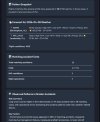
You can now run a briefing directly at mozava.com — no email needed. Just type in what you’re planning to fly and it spits the results out on screen.
We also tightened up the aircraft matching, so jet queries now pull jet accidents instead of mixing in piston trainers. On top of that, there’s basic weather integration for departure and destination airports baked in now.

Still free, still no signup. Really appreciate everyone who’s tried it and sent comments — it’s already made the tool a lot better.

Screenshot 2026-04-07 at 6.39.09 AM.jpgScreenshot 2026-04-07 at 6.41.51 AM.jpg
 
While interesting I don’t see how this would be useful in real life. The database only shows accidents, not near misses or the number of accidents under those specific set of circumstances vs the number of successful flights. There is no context to go along with the results.

In your example of sitting in the aircraft seeing fog rolling in do you think someone will actually pull up their phone or iPad and research the statistics to determine if they should take off or not? Those that would are basing their risk making decisions off of dubious statistics rather than actual conditions which could give them a false sense of security. Those that wouldn’t look it up already ignore obvious risks and are not likely to use the database anyway so it’s not clear who your targeted audience is or what they would gain from the system.
 
I am sure your heart is in the right place, but this just seems like a tool to promote anxiety. Can you return the number of flights that have been completed successfully under the target conditions in addition to what could go wrong? I'm also certain that a VFR pilot who isn't already worried about inadvertently entering IMC on a raining overcast night isn't going to use your tool. It's one of those things where if you know, you know, and if you don't know, you'll never know. Pilots aren't really inventing new ways to kill themselves, and the ones they have are pretty well known.
 
Yeah, both of those are totally fair points.

You’re right that this only looks at accidents, not all the uneventful flights in between. It can’t spit out a real “chance of dying” number, and I’m not pretending it does. What it’s useful for is pattern spotting. There’s a big difference between “IMC is risky” in the abstract and staring at the fact that 11 out of 11 Mooney cruise IMC accidents since 2008 were fatal, with pilots ranging from a couple hundred hours to over 4,500.

On timing, I agree nobody’s pulling this up on a phone with the engine running. The use case is the night before, when you’re looking at weather and deciding whether you really want to file IFR through the rocks, or whether this is a “drive or airline” kind of trip instead.

On who this is for: I did a Mooney‑specific IMC version of this on Mooneyspace. It turned into a 20‑plus reply thread with ATPs, CFIs, and mountain folks arguing personal mins and turbo vs NA in the clag. I don’t think any of them “learned” that IMC or mountains are dangerous, but a few said that seeing hard numbers for their exact airplane nudged how they think about margins. That’s the gap I’m trying to poke at
 
There’s a big difference between “IMC is risky” in the abstract and staring at the fact that 11 out of 11 Mooney cruise IMC accidents since 2008 were fatal, with pilots ranging from a couple hundred hours to over 4,500.
I'm still not sure this is a useful way to present these statistics. What is the base rate? I would expect that most cruise accidents would be fatal, since by definition an "accident" involves either death, serious injury, or substantial damage to the aircraft.

This seems to answer the question, "If this operation results in an accident, how serious will the accident be." I don't see that as nearly as useful as answering the question, "How likely is this operation to result in an accident."
 
Is it assumed that lower time relatively inexperienced pilots may be more prone to panic? This could be a significant cause contributing to a LOC, or other extremely dangerous situation that ends badly. And if panic and loss of cognitive function happens at a time it's needed most, not sure if it can be identified or addressed prior to a pilot getting into a situation that causes it to occur.

Statistics are a useful barometer of what kills pilots, but IMO it would be very helpful to determine who is likely to panic under stress before they're cut loose with a license to learn.
 
I'm still not sure this is a useful way to present these statistics. What is the base rate? I would expect that most cruise accidents would be fatal, since by definition an "accident" involves either death, serious injury, or substantial damage to the aircraft.

This seems to answer the question, "If this operation results in an accident, how serious will the accident be." I don't see that as nearly as useful as answering the question, "How likely is this operation to result in an accident."
Lindberg, you’re exactly right, and I probably haven’t been clear enough about what this thing does and doesn’t do.

It can’t tell you how likely an accident is. Nobody can, because the denominator just isn’t there — we don’t have total flight hours by type, conditions, and route at the level you’d need to build a real exposure‑adjusted risk number. So I’m not pretending to do that.

What it does is narrower: before you fly, it surfaces what has actually happened to people in situations that look a lot like the one you’re about to put yourself in. Same airplane, similar conditions, similar kind of route. It’s not there to spit out “go” or “no‑go” — that’s your call — it’s there to remind you of the exact ways people have died in analogous setups.

Part of why I got into this is because I flat‑out didn’t know what I didn’t know. From the outside, light GA looks like it has big margins — nimble airplanes, big control authority, lots of “I’ll just maneuver out of it.” What I didn’t appreciate is how fast those margins collapse in certain parts of the flight with certain factor stacks. A stall at the wrong altitude in a light GA airplane is not an airshow recovery; you’re out of options. I didn’t know that. Most non‑pilots don’t. And I suspect a few pilots underweight it in specific scenarios too.

So the whole point is pattern recognition in preflight, not some fake probability estimate. If seeing that, say, 11 out of 11 Mooney cruise‑phase IMC accidents were fatal makes even one pilot stop and rethink their personal mins before they file, that’s the entire product right there.
 
It can’t tell you how likely an accident is. Nobody can, because the denominator just isn’t there — we don’t have total flight hours by type, conditions, and route at the level you’d need to build a real exposure‑adjusted risk number.
I don't think this is true except in the general sense that statistics aren't really predictive of individual events. But the statistics exist.
So the whole point is pattern recognition in preflight, not some fake probability estimate. If seeing that, say, 11 out of 11 Mooney cruise‑phase IMC accidents were fatal makes even one pilot stop and rethink their personal mins before they file, that’s the entire product right there.
Please don't take offense, because I do believe your heart is in the right place, and I admire your desire to turn your grief into something useful, but this strikes me as a big base-rate fallacy. It also fails to take into account how people actually make decisions.

No one intends to unexpectedly enter IMC, just as no one intends to hit the side of a mountain. No one who fails to wear their seatbelt expects to get into an accident. So telling people that if those things (that they don't believe are going to happen) will be fatal if they happen, won't move the needle. If you want to change behaviors, you need to convince them that the event they aren't concerned about is actually more likely than they believe.
 
I don't think this is true except in the general sense that statistics aren't really predictive of individual events. But the statistics exist.

Please don't take offense, because I do believe your heart is in the right place, and I admire your desire to turn your grief into something useful, but this strikes me as a big base-rate fallacy. It also fails to take into account how people actually make decisions.

No one intends to unexpectedly enter IMC, just as no one intends to hit the side of a mountain. No one who fails to wear their seatbelt expects to get into an accident. So telling people that if those things (that they don't believe are going to happen) will be fatal if they happen, won't move the needle. If you want to change behaviors, you need to convince them that the event they aren't concerned about is actually more likely than they believe.
I think you’re raising very good points and I don’t want to sidestep them.

On the denominator piece, I agree there is a real one at the fleet level. Between GAMA, FAA, etc., you can back into reasonable accident rates per 100k hours. Where it breaks for what I’m doing is when you zoom into a specific profile: this airplane, this kind of trip, this weather and terrain. We just don’t have hours broken out at that level, so I’m not trying to sell anyone a clean “your chance on this flight is X%.” And I’m with you that just saying “if this happens it’s usually fatal” doesn’t move people who don’t think that scenario will ever be theirs.

Where I see it a bit differently is on the “it won’t change behavior” part. The Mooneyspace thread was kind of a surprise to me in the opposite direction. That discussion didn’t take off because I posted some clever rate; it took off because specific accidents and a very specific story hit close to home. Kortopates’ write‑up on the Jackson Hole pilot got a bunch of likes not because the math was special, but because people could see themselves making the same chain of choices.

For me the gap isn’t that pilots don’t know IMC or mountains are dangerous. Everybody in these threads already knows that. The gap is connecting that general knowledge to the particular decision you’re about to make on a given day, with your tickets, your airplane, your weather. A 300‑page safety book you read in January is one thing; seeing someone with similar hours, in your type, on a similar route, walk through a set of choices that killed him is a different kind of input. Based on the “I wouldn’t have launched on that flight” comments from a lot of very experienced folks, I don’t think that’s completely worthless.
 
You’re doing something interesting here, but you’re still answering the wrong question.

Pilots don’t need more reminders that accidents are fatal. We already know that. Saying “11 out of 11 died” doesn’t change behavior, because nobody believes *this* is the flight where it happens.

The real problem is self-recognition.

Accidents don’t begin with obviously bad decisions—they begin with situations that look ordinary. Slightly worse weather than forecast. A plan that’s “probably fine.” A decision to continue just a little farther. By the time it’s clearly unsafe, the pilot is already deep in it.

So if this is going to matter, it has to focus less on how bad the outcome is and more on how normal the setup looks—and how the situation evolves. What actually drives behavior is recognizing, “this looks like something I would do,” not “this ends badly.”

That’s where AI could genuinely help solve the problem. Not just by clustering past accidents, but by using AI to model how risk actually develops over time in real flights, by applying AI to detect subtle patterns across thousands of cases, and by leveraging AI to translate those patterns into something a pilot can actually use in real time.

Instead of just grouping similar accidents, use AI to evaluate the risk of a specific planned flight before it launches. If a pilot could enter a route, weather trends, aircraft capability, and their experience level, an AI system could return something much more useful than a list of similar crashes. It could say that flights launched under similar conditions often drifted into a particular risk pattern, and explain how that typically happened—where pilots pressed on, where they could have diverted, and where things became unrecoverable.

More importantly, AI could identify the decision points that matter most—the forks where outcomes start to diverge—and highlight them in a way that’s specific to that flight. It could also use AI-driven comparisons to show how often pilots in nearly identical situations believed things were still under control right up until they weren’t, and use AI-based forecasting to estimate how the risk profile of that flight is likely to evolve as conditions change.

The key isn’t just identifying the endpoint. It’s identifying the path, especially the parts where everything still felt reasonable.

If you can use AI to show a pilot how people in their exact situation gradually got into trouble—and do it early enough to matter—then you’ve got something that might actually
change decisions.
Lindberg, this is super helpful, so thank you for taking the time to lay it out that clearly.

I think your reframe is better than the way I’ve been describing it. The real value isn’t “this is fatal if it happens,” it’s “this looks uncomfortably close to something you might do.” That self‑recognition point matters a lot more than trying to scare people with outcomes.

The “how normal it looked” insight is the one that really lands with me. The Jackson Hole flight looked like a normal IFR trip. The Chamberlain hunting flight looked like a normal annual tradition. The ER doctor’s flight looked like an ordinary hop he’d done many times. The scary part in all of these is exactly what you said: the parts where everything still felt reasonable.

On the AI piece, I think you’re pointing in the right direction. What I’m doing now is the pattern‑matching foundation — trying to surface accidents that resemble a given flight.

Where I want this to go is very close to what you described: you plug in route, weather picture, aircraft, experience, and instead of just a list of crashes, you get a clearer sense of how risk stacks up along your plan and where the decision points are before you ever start the engine.
 
what are some reasons the emails could fail?
my first one worked ok

the second one, got a ‘we’re working on your flight’ email, but no final response.

does it matter what’s in the subject line?
 
what are some reasons the emails could fail?
my first one worked ok

the second one, got a ‘we’re working on your flight’ email, but no final response.

does it matter what’s in the subject line?
Thanks for giving it a try. It doesn't matter what is in the subject. I tested it again now, and seems to be working. When did you try it, as I don't see any email tests today?

You may find it easier to try at mozava.com
 
It sounds like you are developing your own risk management tool. These are common. Sometimes called safety management systems. The Memphis Navy Flying Club has one (use required by the Navy). It's a weighted sum spreadsheet. AOPA used to have one, probably still does. There are a few Apple apps for it. I understood the FAA is soon to mandate something like that for GA. I believe most are based on actuarial analysis of the accident data that's out there. I suppose you can pattern match accident data using the ever present LLM transformation tools tool. Welcome to the team, I support any practical effort to improve safety. Everyone involved will learn too.
 
It sounds like you are developing your own risk management tool. These are common. Sometimes called safety management systems. The Memphis Navy Flying Club has one (use required by the Navy). It's a weighted sum spreadsheet. AOPA used to have one, probably still does. There are a few Apple apps for it. I understood the FAA is soon to mandate something like that for GA. I believe most are based on actuarial analysis of the accident data that's out there. I suppose you can pattern match accident data using the ever present LLM transformation tools tool. Welcome to the team, I support any practical effort to improve safety. Everyone involved will learn too.
Thank you — that context is useful.
You’re right that FRAT and SMS systems have been doing the weighted‑factor approach for a long time. What I’m trying to layer on top of that is specificity: instead of a generic risk score from a checklist, map a proposed flight to what actually happened to pilots in similar situations in similar aircraft. Whether that ends up being more useful than the current tools is an open question, which is why feedback in discussions like this matters. The people using those systems regularly have a much better sense than I do of which signals actually influence decisions and which ones are just noise.
 
Thanks for giving it a try. It doesn't matter what is in the subject. I tested it again now, and seems to be working. When did you try it, as I don't see any email tests today?

You may find it easier to try at mozava.com
worked today
wondering what ‘misinterpreting information’ means…
weather or notams?
attitude indicator?
 
worked today
wondering what ‘misinterpreting information’ means…
weather or notams?
attitude indicator?
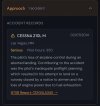
Good question. In that Cleveland accident, “misinterpreting information” was mostly about the transition from the Mustang to the CJ4.

The pilot only had a few dozen hours in the CJ4. In his previous jet, the autopilot had a light on the panel that confirmed it was engaged; in the CJ4, the only confirmation was on the PFD. He likely pushed the button, assumed it was on based on habit, and stopped actively flying when the autopilot was actually off.

Once things started to go wrong over the lake at night with no outside references, the attitude display worked the opposite way from what he was used to in the Mustang. So his instincts from the old airplane were fighting what the instruments were actually showing, on top of being tired and newly typed. The end result wasn’t about weather or NOTAMs — it was about cockpit design and negative transfer between two similar but different airplanes.
Thanks for the interpretation.
That's actually a great reminder.

1. Take action (autopilot on)
2. (don't assume desired effect will happen)
3. Confirm task accomplished (several things here: "AP" light on the EFIS; autopilot button light illuminated; EFIS also shows - LNAV or HDG indication, fpm or alt hold indication; then most importantly.... does the instrumentation agree that the airplane is going where you want it)
 
So we're just having AI write everything now?
Just the typing. The questionable judgment is still all me.

I literally had AI generate that response for me.
 
Quick update on the tool for anyone following along.

I fixed how it handles weather. Before, it was basically treating “IFR flight plan” as “IMC weather,” which obviously isn’t right — lots of us file IFR on blue‑sky days. Now it ignores the flight plan type and classifies the weather based only on the actual conditions described.

That one change makes the output a lot more believable. I ran the same Baron B55 trip from Minneapolis to northern Michigan two ways:

• Good weather: 69 matching Baron accidents, 29% fatal. Top matches are fuel management issues and crosswind landings.​

• Crummy weather (800‑foot ceilings, 3 miles viz, gusty crosswind): 21 matching Baron accidents, 57% fatal. Top matches shift to icing encounters, spatial disorientation on missed approaches, and approach stalls.​

Same airplane, same route, same pilot. Just changing the weather nearly doubles the matched fatality rate and completely changes which accidents float to the top. That’s the kind of separation between “good day” and “marginal day” that just wasn’t showing up before.

Latest version (free) : https://mozava.com
 
Way too many variables for this to be of any use. Plane model means very little as how the planes are equipped can be wildly different. Imc with a gtn750 and gfc500 is very very different than handflying with a six pack and VOR's
 
Way too many variables for this to be of any use. Plane model means very little as how the planes are equipped can be wildly different. Imc with a gtn750 and gfc500 is very very different than handflying with a six pack and VOR's
Fair point — but the tool isn’t just matching on aircraft model.

Under the hood, it uses most NTSB accident reports to filter for things like aircraft type, weather, light condition, pilot hours, geography, phase of flight, and FAR part, then tries to surface accidents that are meaningfully similar to the flight you’re about to make.

It’s not a go/no-go engine. It’s a preflight learning tool meant to highlight scenarios or traps you may not have considered.
 
@StevenK
at one time, a website offered a summary of accidents based on airports which I found useful.
ie KABC is my destination & I’m not familiar with it - report says it had a lot of runway excursions due to surface contamination, or high cfit rate due to surrounding terrain.

Just an idea to incorporate (if not already), for future iterations.

I think it’s understood your work with this is imperfect because it’s in the developing stages; don’t be put off, keep at it!
 
Fair point — but the tool isn’t just matching on aircraft model.

Under the hood, it uses most NTSB accident reports to filter for things like aircraft type, weather, light condition, pilot hours, geography, phase of flight, and FAR part, then tries to surface accidents that are meaningfully similar to the flight you’re about to make.

It’s not a go/no-go engine. It’s a preflight learning tool meant to highlight scenarios or traps you may not have considered.
That's fine. It's interesting. But this has no value to me as a pre flight tool.
 
@StevenK
at one time, a website offered a summary of accidents based on airports which I found useful.
ie KABC is my destination & I’m not familiar with it - report says it had a lot of runway excursions due to surface contamination, or high cfit rate due to surrounding terrain.

Just an idea to incorporate (if not already), for future iterations.

I think it’s understood your work with this is imperfect because it’s in the developing stages; don’t be put off, keep at it!
That's a really good idea. The data is already organized by airport and geography so building an airport-specific accident profile is definitely doable. Something like "here's what tends to go wrong at this airport" based on historical data. Adding it to the list. And appreciate the encouragement.
 
Quick update on the tool for anyone following along.

I fixed how it handles weather. Before, it was basically treating “IFR flight plan” as “IMC weather,” which obviously isn’t right — lots of us file IFR on blue‑sky days. Now it ignores the flight plan type and classifies the weather based only on the actual conditions described.

That one change makes the output a lot more believable. I ran the same Baron B55 trip from Minneapolis to northern Michigan two ways:

• Good weather: 69 matching Baron accidents, 29% fatal. Top matches are fuel management issues and crosswind landings.​

• Crummy weather (800‑foot ceilings, 3 miles viz, gusty crosswind): 21 matching Baron accidents, 57% fatal. Top matches shift to icing encounters, spatial disorientation on missed approaches, and approach stalls.​

Same airplane, same route, same pilot. Just changing the weather nearly doubles the matched fatality rate and completely changes which accidents float to the top. That’s the kind of separation between “good day” and “marginal day” that just wasn’t showing up before.

Latest version (free) : https://mozava.com
Are you actually AI, or are you just using Claude to write this program and all your posts here?
 
@StevenK
at one time, a website offered a summary of accidents based on airports which I found useful.
ie KABC is my destination & I’m not familiar with it - report says it had a lot of runway excursions due to surface contamination, or high cfit rate due to surrounding terrain.

Just an idea to incorporate (if not already), for future iterations.

I think it’s understood your work with this is imperfect because it’s in the developing stages; don’t be put off, keep at it!
I built the airport profile feature you described. It's live on mozava.com now as a second tab next to the Flight Brief. Enter an airport code, optionally select your aircraft type, and it shows you what historically goes wrong there — broken down by landing, takeoff, approach, cruise, with cause patterns and linked NTSB records for each phase.

Try your home airport or somewhere you fly into regularly and tell me if that's what you had in mind. If the specific model doesn't have enough data at that airport, it automatically widens to all aircraft from that manufacturer.

Screenshot 2026-04-12 at 11.33.26 AM.jpg Screenshot 2026-04-12 at 11.33.35 AM.jpg
 
Back
Top