Destroyed the engine with excessive leaning?

Yes, he has had training but the question is with the EGT's at 350 and rpms at 2600 can it actually damage the engine or just foul the plugs. So you disagree with the below statement????

Jon Wilder said:


Mike Busch has repeatedly stated that below 70-75% power, there is zero chance of damaging an engine via mixture setting. Basically anywhere is fair game. It's when you get to the 75% power and above that mixture setting becomes critical.
 
The folks at GAMI disagree. They state at below 65% power, you can run any mixture without risk of detonation assuming your max CHT is reasonable (380f or under in cruise).
 
I "chase" egt in climb. Monitor cht. Level off and lean to peak. Leaning 50 degrees lean of peak is a very marginal fuel savings.

Flying a naturally aspirated engine you can't get the egt hot enough to damage. You can nuke cylinders if you're leaning in climb.

Now if the plane in question is turbo, then that changes the dynamic.
Example 1. Taking off @ SL. Full rich, full power. Highest EGT is 1335F. CHT 380F. Planned for 9500
@3000'ASL: EGT is now 1265F. Same fuel, but less air = beyond 150F ROP.
To still get max take off/climb performance, keep leaning the mix back to the initial T/O 1335F for the duration of the climb. Keep an eye on the CHT, due to higher nose attitude/less cooling.

Example 2. Short grass strip @ 3000' ASL. Lean on the ground for max RPM/best power. Why is this acceptable and continuous leaning during the climb not?

Trying to learn :confused:
 
Let's assume that you flew a Lycoming 360 for about 2 hours at 9500' and at 2600 rpms and did not lean and CHTs at 350. Would that damage the engine? Asking for a friend.

Dunno but it would damage your wallet.
 
With no engine monitor, on a carbureted engine, we typically lean to roughness and then richen just enough to smooth it.

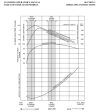
So, where is onset of roughness on this chart?


1783906210478.png
 
With no engine monitor, on a carbureted engine, we typically lean to roughness and then richen just enough to smooth it.

So, where is onset of roughness on this chart?


View attachment 153356

It is my understanding that roughness begins in the left half of the best economy range, so LOP. Enriching it until smooth tends to put it at peak, plus or minus.
 
Last edited:
It is my understanding that roughness begins in the left half of the best economy range, so LOP, and enriching it until smooth tends to put it right about at peak, or perhaps a bit lean.

Thanks!

I’m usually more concerned with power than fuel economy, and this graph seems to imply that if I leaned until RPM peaks, I’d be in a very safe spot for CHT. I’m not sure how trustworthy the graph is in that region, though.
 
Thanks!

I’m usually more concerned with power than fuel economy, and this graph seems to imply that if I leaned until RPM peaks, I’d be in a very safe spot for CHT. I’m not sure how trustworthy the graph is in that region, though.

I think between that and keeping power under 75%, you would be very safe.

TBH I think the Internet creates a degree of analysis paralysis due to TMI. For my first 30 years of flying, I was blissfully unaware of any of this stuff. I set power to cruise, leaned til it stumbled, enriched til it was smooth again, and went on my merry way. Same with everyone I flew with. Never heard of anyone damaging an engine.

:yeahthat:
I have a sneaking suspicion that engine monitors, rather than helping people take better care of engines, sometimes encourage them to run their engines closer to performance limits.
 
:yeahthat:
I have a sneaking suspicion that engine monitors, rather than helping people take better care of engines, sometimes encourage them to run their engines closer to performance limits.

Absolutely. But if you really want to milk the fuel economy, they are handy. Lean to stumble, rich to smooth gets me about 10gph. With the monitor I can dial it down to 7gph. That's an extra hour of endurance. If only my bladder could keep up.
 
Absolutely. But if you really want to milk the fuel economy, they are handy. Lean to stumble, rich to smooth gets me about 10gph. With the monitor I can dial it down to 7gph. That's an extra hour of endurance. If only my bladder could keep up.

Yep! I only have a 3-hour bladder, so 5 hours of fuel doesn’t do me a lot of good.
 
Mike Busch has repeatedly stated that below 70-75% power, there is zero chance of damaging an engine via mixture setting.
I thought Mike's comments that referenced the 75% had to do with Detonation and getting up to 75% while LOP.

I didn't think that he said there was zero chance of damaging your engine in ANY situation. Do you have a reference IN CONTEXT where he was saying you could never damage your engine at 75%?

And not just GAMI but multiple people, I thought Mike B too, have said that at or below 65% you could not damage your engine by aggressive leaning.
 
Last edited:
Mike Busch has repeatedly stated that below 70-75% power, there is zero chance of damaging an engine via mixture setting. Basically anywhere is fair game. It's when you get to the 75% power and above that mixture setting becomes critical.
Is Mike Busch going to repeatedly replace your cylinders for free if he is wrong?
 
I’m in the camp that at lower power settings, it’s much less likely to cause problems leaning. I also watch the CHT’s, keep things below 400, Lycoming. I most often lean by ‘feel’, stumble then slightly richen, peak at fuel flow.

If not doing much, I’ll do it but EGTs to recalibrate. A few knots lost with the power back isn’t usually a biggie.
 
Example 1. Taking off @ SL. Full rich, full power. Highest EGT is 1335F. CHT 380F. Planned for 9500
@3000'ASL: EGT is now 1265F. Same fuel, but less air = beyond 150F ROP.
To still get max take off/climb performance, keep leaning the mix back to the initial T/O 1335F for the duration of the climb. Keep an eye on the CHT, due to higher nose attitude/less cooling.

Example 2. Short grass strip @ 3000' ASL. Lean on the ground for max RPM/best power. Why is this acceptable and continuous leaning during the climb not?

Trying to learn :confused:
>>>Why is this acceptable and continuous leaning during the climb not?<<<

In example #1 at 3000 feet you are leaning back to best power, assuming that full rich at SL is giving you Best Power at about 100-150°F ROP. You don't have to wait for 3000 feet to perform your first lean, but you should wait long enough for exhaust temperature to drop enough to make leaning worthwhile.

The numbers you quoted are similar to the numbers I see on my IO-360 200HP Mooney, but as I climb the CHT tends to climb above 380 to around 400. On a hot day with high density altitude of 2000 at SL you could lean to best power before takeoff, but
it is not usually necessary. If I did that I would want to I be just on the rich side of full power, (150 ROP not 100 ROP) to get better CHTs during initial climb.

In example #2 you specify a grass strip at 3000 MSL and leaning to best power. On a hot day as described above that might be a density altitude of 5000. Clearly you would want to lean to best power for that takeoff.
 
AFAIK Lycoming has never addressed LOP operations.

After glazing all four IO360 cylinders flying ROP for approximately 1000 hours (since new) at 75% power settings using Exxon Elite synthetic oil I nibbled on the bait and researched GAMI injectors (George Braily and crew) and others about LOP operations while the plane was in the shop waiting for the cylinders to be roughed up and reinstalled.

After speaking with Mooney guru Paul Lowen at Lake Aero Styling on the topic of LOP versus ROP I recall his comment "in level flight it's better to cool the engine with air rather than excess fuel". I then took a scary leap into the unknown and informed the shop that they'd also be installing GAMI's. The shop owner said that's crazy and the plane would without a doubt be back in his shop for cylinder work within 500 hours, adding the warning that the engineers at Lycoming do not recommend any LOP operations because it will fry the valves and cylinders.

Turned out, at least in my experience, flying approximately 2700+ hours LOP and saving 5000+ gallons of 100LL in fuel alone, plus the savings realized from not needing any cylinder work, operating LOP has worked out great.

Have spent some money on an aftermarket cowling while also sealing up the baffling and seals in order to improve airflow and reduce cylinder temps. The other day took off (near gross weight) with an OAT of 90F. During the climb out (ROP) the hottest cylinder hit 355 F, and cruising at 7500' LOP with an OAT of 67F the hottest was 340F. I would literally freak out if any cylinder ever approached 400F or higher.

Maybe the 400's are OK in some engine applications for obtaining healthy long-term cylinder life, but IMO operating with temps significantly lower than what the factory engineers consider the maximum can't be a bad thing. Or maybe I've just been lucky.
 
I try to keep it simple. Take off and climb I keep it full rich, cowl flap open. Throttle and RPM top of green arc when climbing.

When I level off, if I'm X Country I set RPM at 2300, throttle top of green, close cowl flaps, and pull mixture back until stumble and then richen it to remove stumble. I shoot for 350 degrees CHT. If I'm below, I richen a bit. If high, I lean. The mixture control is the "CHT controller". Throttle? If at cruising altitude, 7000 - 9000 feet, it's not a factor. I have it shoved in all the way and the most I can get is 21 or so. (Yea - I do envy you turbo guys!)

If I'm putzing around locally, getting a $200 burger, I'll just leave the mix full rich and cowl flap open.

I get about 135 TAS at altitude, 11 gallons per tach hour. I calculate fuel usage at 13 GPH for total flight time.
 
Is Mike Busch going to repeatedly replace your cylinders for free if he is wrong?
That.

While I subscribe to their roadside service, in the end, he basically carries all the risk of SGOTI for stuff in this thread. If his “red fin” is ultimately proven to be not only wrong but harmful and it destroys engines, good luck getting much more than a shoulder shrug and a “huh - guess I was wrong”.

Your mechanic does something untoward and you have recourse, at least in theory. Same with the engine manufacturers.

I’d say Savvy offers some good food for thought but they’re not definitive or accountable. And they’re not a religion, though sometimes people seem to treat them as such.
 
I "chase" egt in climb. Monitor cht. Level off and lean to peak. Leaning 50 degrees lean of peak is a very marginal fuel savings.

Flying a naturally aspirated engine you can't get the egt hot enough to damage. You can nuke cylinders if you're leaning in climb.

Now if the plane in question is turbo, then that changes the dynamic.
Lycoming has a service instruction about leaning their engines. In it, they state to leave the mixture full rich in takeoff or climb. For 5K feet density altitude and above, or high ambient temperatures, roughness or reduction of power may occur at full rich mixture. The mixture may be adjusted to obtain smooth engine operation. They also state that EGT leaning on float type carbureted engines offers little improvement over the procedures outlined above (lean to maximize either RPM or airspeed for best power, or lean to engine roughness, then richen to restore an evenly firing engine for best ecomomy) due to the uneven fuel distribution.

 
Example 1. Taking off @ SL. Full rich, full power. Highest EGT is 1335F. CHT 380F. Planned for 9500
@3000'ASL: EGT is now 1265F. Same fuel, but less air = beyond 150F ROP.
To still get max take off/climb performance, keep leaning the mix back to the initial T/O 1335F for the duration of the climb. Keep an eye on the CHT, due to higher nose attitude/less cooling.

Example 2. Short grass strip @ 3000' ASL. Lean on the ground for max RPM/best power. Why is this acceptable and continuous leaning during the climb not?

Trying to learn :confused:
I don't think there's anything wrong with continuous leaning during climb. You're keeping the fuel air ratio as close as you can to what you were on takeoff. As long as you're not at a lean mixture. You lean when EGT start to drop.

As for example 2: I will defer to John Deakin and his mixture magic article "At very high power settings (such as takeoff power), we’ve found that throwing extra fuel into the mixture (providing an enriched mixture at the rich side of the flat peak of the BHP curve) helps keep temperatures down and allows us to develop even more power without the risk of detonation. This is why many engines have a “power enrichment” feature at full throttle. We’re willing to waste some fuel for a worthy cause during takeoff, especially since we usually don’t run at that high power for long.

But also, the higher the DA the less available horsepower we have and that 65-75% power number comes into play again. 3,000 DA might be a little to low to play the best power game
 
Example 1. Taking off @ SL. Full rich, full power. Highest EGT is 1335F. CHT 380F. Planned for 9500
@3000'ASL: EGT is now 1265F. Same fuel, but less air = beyond 150F ROP.
To still get max take off/climb performance, keep leaning the mix back to the initial T/O 1335F for the duration of the climb. Keep an eye on the CHT, due to higher nose attitude/less cooling.
The EGT value is just an arbitrary number and completely meaningless. The probes are like 2-4" from the exhaust port in the cylinder. They only see hot gasses for 25% of the 4-stroke cycle. They see nothing for the remainder of the cycle. As the probe is too slow to react to every single exhaust gas pulse, it just ends up averaging on some arbitrary number.

What is important when using EGT for leaning is monitoring not the value, but the behavior of the indication to ascertain where in the mixture setting peak EGT occurs.

The lower climb airspeed has more to do with reduced cooling than higher nose attitude does. If you could maintain the same airspeed at the higher nose attitude, you'd see no reduction in cooling performance.

Example 2. Short grass strip @ 3000' ASL. Lean on the ground for max RPM/best power. Why is this acceptable and continuous leaning during the climb not?

Trying to learn :confused:
Because you're only at best power long enough to get 1K-2K feet away from the ground. You're in the climb phase of flight for a much longer period of time. Leaning to best power @3000 ft and keeping it there throughout the climb is only going to be "best power" long enough to get away from the ground. It will get richer otherwise, which aids in keeping things cool throughout the climb in exchange of power. Leaning to keep making max power throughout the entire climb phase just makes things run hotter for longer.
 
I keep it max rich in climb for cooling more than dialing it in for power.
 
Honestly I think the whole Busch thing is an IQ test to differentiate those who understand that anecdotes are not data.
The last time I saw an owner’s invoice for cylinder work it sure looked like hard data.
 
Yes, he has had training but the question is with the EGT's at 350 and rpms at 2600 can it actually damage the engine or just foul the plugs. So you disagree with the below statement????
I'll definitely disagree about having EGTs below 350°.

Unless that was a typo, it reflects the biggest problem with the issue.
 
I keep it max rich in climb for cooling more than dialing it in for power.
The "max rich" part is a very seal level view. I flew in Colorado for 20 years and I've seen normally-aspirated airplanes attempt to take off full rich. In one, the engine quit as the pilot was taxiing onto the runway. And if you did manage to take off, the airplane would struggle so much because of it's lack of power, your temps might be negatively affected also.

I agree with your underlying point - additional fuel for engine cooling. for the climb. But it does not require full rich. Typical leaning for takeoff at high density altitudes is leaning for max power with an enrichening tweak - 2-3 180° twists of a vernier mixture control and the equivalent for a handle - for cooling.
 
Yes, he has had training but the question is with the EGT's at 350 and rpms at 2600 can it actually damage the engine or just foul the plugs. So you disagree with the below statement????
In what universe would you ever see EGT's of 350°F?
 
The "max rich" part is a very seal level view.
1) I agree with you, but as my airport is 1000' MSL or so, this will work for me. I've not yet had problems getting to altitude 7000 - 9000 or so with it before I level and lean.

2) This guy also sees your view. :biggrin:

1784038176512.png
 
1) I agree with you, but as my airport is 1000' MSL or so, this will work for me. I've not yet had problems getting to altitude 7000 - 9000 or so with it before I level and lean.

2) This guy also sees your view. :biggrin:

View attachment 153383
Right, but, perhaps because I have lived and flown in both environments, whatever the appropriate procedure may be at a particular location, I think of engine management discussions as something that needs a broader context than the altitude of "my" departure airport. So I mentioned it. No negative implication intended.

"I always takeoff full rich" is a statement that applies to at or near sea level .
"I always takeoff aggressively leaned" is a statement that applies to the Rockies.
"I always takeoff at with the mixture at the appropriate setting for conditions" applies to both extremes and in between.

And personally, on a 90+° day at PUJ (about 3500' D-Alt), I'd be leaning for takeoff in a normally-aspirated piston. My home base is 1,000' lower and I've done it here and, if given the opportunity, demonstrate to clients the increase in takeoff and climb performance without compromising operating temperatures.
 
Good points - appreciate them. For whatever reason, my CHT can get start to get toasty in the climb on a hot day if I let it get away. Thus, I do whatever to keep engine cool. And so far, I’ve not been hurting for climb power.
 
Good points - appreciate them. For whatever reason, my CHT can get start to get toasty in the climb on a hot day if I let it get away. Thus, I do whatever to keep engine cool. And so far, I’ve not been hurting for climb power.

Some aircraft are more prone than others. Usually 6 bangers. Hence the cowl flaps.
 
  • Like
Reactions: WDD
All great points. Even Lycoming says to lean for max RPM on takeoff if departing from an airport above 3000 DA, but to leave it there in the climb unless leaning becomes necessary to restore smooth engine operation.
 
I was taught right from the first lesson at a sea level airport to lean for best power on takeoff and landing. My CFI pointed out that even though at that field we pretty much always are at full rich, I will be flying to fields where it matters, and to get “full rich” out of my head and think “best power”.
 
Honestly I think the whole Busch thing is an IQ test to differentiate those who understand that anecdotes are not data.
I’m not a SavvyAviation customer, and everyone here should know by now that I have a low IQ.

Operating LOP is not a “Busch thing.” It’s a technique that has been researched and utilized at least as far back as WWII. A few decades back, George Braly developed a set of balanced fuel injector nozzles, tuned to each individual engine, so that LOP operation can be accomplished safely. Braly, at GAMI, built a test cell and has accumulated thousands of hours of data (not anecdotes). The Red Box (Busch calls it the “red fin”) was developed from that test data. Braly, along with Walt Atkinson and John Deakin, developed a roadshow they called Advanced Pilot Seminars that served as a training class to teach pilots how to operate LOP safely using GAMI injectors and an engine monitor, based on the data and lessons learned from testing and development. Busch seems merely to have adopted Braly’s research and operating principles. It’s worth noting that Busch’s SavvyAviators has collected and analyzed tens of thousands of hours (probably much more) of data downloads from customers’ engine management instrumentation*. My impression is that Savvy relies on that data when advising customers regarding engine issues.

If anything, GAMI and Savvy may be the most data-driven engine operation resources that GA has ever had. Now, tell me about the anecdotes you spoke of, and please dumb it down so that a low IQ person such as yours truly can grasp your point.

*Edit to add thousands of borescope images from customers’ engines.
 
Last edited:
All great points. Even Lycoming says to lean for max RPM on takeoff if departing from an airport above 3000 DA, but to leave it there in the climb unless leaning becomes necessary to restore smooth engine operation.
I tend to lean for climbs, but at least part of this is, even being away from there for a dozen years, after 20 years in Colorado, adjusting mixture is as natural to me as adjusting MP or RPM.

Something I think we tend forget with all the discussion of GAMI spreads, red boxes, numerical EGT, CHT, fuel flow, and HP values, is that basic leaning is not rocket science. That 3000 foot DA spread is telling us that until we get to the very edges, particularly for full power takeoff and climb needs, we're talking yardsticks, not micrometers. If we happen to know our target EGT for best power plus cooling, we can tweak to match it, but most of us are not going to start recalculating. If we don't lean in the climb, the mixture is generally enrichening . Cooling needs should be taking care of itself (although watch those CHTs). Unless you are doing an extended climb, engine roughness from being too rich is not all that likely.
 
Back
Top