Converting an O-320-D1A to an O-320-D2A, FAA documentation

Kiddo's Driver

Pattern Altitude
Joined
Oct 5, 2013
Messages
1,927
Location
Somewhere in the Southeast
Display Name
Jim
Well, my Tampico's Lycoming O-320-D2A, configured for a fixed-pitch propeller, has finally given up the ghost. 6,000 hours TT, 34 years old, 1800+ SMOH, and 28+ years SMOH. It had a good run, but it's done now. Making a LOT of metal.
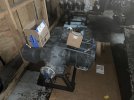
The good news is that I have a new-old-stock Lycoming O-320-D1A, configured for a constant speed propeller, sitting in the hangar.
The difference between the two engines is the configuration of the plugs in the hollow crankshaft and the thread size in the propeller flange bushings. It's an easy conversion.
Obviously, I will also need to remove the propeller governor, put a cover plate on the pad, remove the piping and fittings from the governor to the front of the engine for the CS prop, and then plug the holes.
The process for converting from CS to fixed pitch is covered in Lycoming SI1435, attached below. It includes what you need to do to mark the engine tag to indicate it has been modified, as well as what to do in the engine logbook.
Lycoming SI1304K states that they won't issue a new engine tag and provides guidance on marking the tag, making engine logbook entries, and submitting a 337, SI attached below.
I've called my local FSDO and talked to them.
Is it really as simple as making the CS-to-fixed-pitch changes, swapping the propeller flange inserts from 7/16" to 3/8", making the engine logbook entries, and then submitting a 337?
That is the guidance I got verbally from the FSDO, and it aligns with the SIs.
I've also attached the Lycoming Engine Designations SSP. D1A is at the bottom of the third page. D2A is at the top of the fourth page.
 

Attachments

Last edited:
Met a Cardinal with a similar conversion; albeit no paperwork!

Couple days late the Seller produced the 337.

Coincidentally; he was an FAA employee!
 
My A&P/IA is reluctant to do it.

Does he have an alternate method of documenting the conversion?

You might have to find another mechanic to help with the conversion and paperwork for it if this is outside the comfort zone of your primary guy.
 
Does he have an alternate method of documenting the conversion?

You might have to find another mechanic to help with the conversion and paperwork for it if this is outside the comfort zone of your primary guy.
He wants me to send it to an engine overhaul shop for the conversion.
I'm playing phone tag with another A&P/IA right now to see if they will do it.
 
He wants me to send it to an engine overhaul shop for the conversion.
Sounds more like he simply doesnt want to do the work. These are the alterations most mechanics would live for when the OEM provides all the data and the FAA on board to boot. Now if he needed to get all the approvals I could see his reluctance.
 
Feels more like it is uncharted territory for him. He is unfamiliar with the process, which represents a risk.
It's something he's never done or run into before, so I get it.
I'm going to print out what I have found and take it up to him next week to discuss. Hopefully, either that works, or the other A&P I'm trying to contact will do it.
In the meantime, I need to order a plug for the front of the crankshaft (STD-1211) & a plug for the control oil port in the upper right of the case. The SI shows an MS20822-6 elbow when it is plumbed for tubing. That fitting has a 1/4 NPT thread. I already have the cover plate & gasket for the governor pad.

Also, I need to make a rig to push oil in through the filter connection to prelube the engine...
 
Feels more like it is uncharted territory for him. He is unfamiliar with the process, which represents a risk.
It's something he's never done or run into before, so I get it.
I'm going to print out what I have found and take it up to him next week to discuss.
Well can't fault a person who knows their limits. But I would still try and get specifics on why.
 
A&P doesn't feel comfortable doing it, so yes, find another A&P. BTW, did you have a spare engine in the hangar in anticipation for this, or has it been sitting there for years?

Leading to the next question of how long has your new donor engine been sitting? How was it stored? How many hours and time since its overhaul/rebuild? Might you have other work to do from the engine just sitting in addition to the CS to Fixed prop conversion?
 
Rather than typing the same story again:
 
  • Like
Reactions: WDD
Thanks - didn't click that this was referring to a previous thread. Sounds like "unpickle, inspect, and add the accessories" fun is beginning!

I see in the previous thread you are thinking about what to do about the mags. Thinking about one or both being electronic, like a SureFly?
 
Thanks - didn't click that this was referring to a previous thread. Sounds like "unpickle, inspect, and add the accessories" fun is beginning!

I see in the previous thread you are thinking about what to do about the mags. Thinking about one or both being electronic, like a SureFly?
To start with, I'm going to move the existing Slick mags to the engine for ground runs and break-in. Once it is broken in, I'll make a decision on changes. My existing mags have about 350 hours on them since new, and I had good, consistent mag checks on the old engine.
 
  • Like
Reactions: WDD
I never thought finding an A&P willing to install a new engine would be a problem...
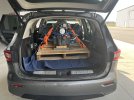
The plane is grounded in Middle Tennessee right now. In a hangar. New engine on a pallet right next to the plane.
Anyone know an A&P willing to do the install or to help me do the install?
 
I never thought finding an A&P willing to install a new engine would be a problem...
The answer to that depends on the context of your statement. Does this new engine still require modifying it from a -D1A to a -D2A? And is it the same engine that was preserved for 25 years?
 
It seems you can’t get a Tech from the airport for the task. My take on doing the job as a “ Road Warrior”.

1. I would want related copies and pix BEFORE first trip. Has there been a
determination of AD’s that may apply here?

2. First trip would be to evaluate the situation such as hoses , engine
controls, baffles , etc. Are hoses and oil cooler being replaced due to
metal?

3. WHO will be responsible for getting correct parts on the scene? Toooo
often I’ ve arrived only to find the owner got the wrong gasket, bolt
or washer. Would you expect the Tech to “eat” the trip or pay for
another trip to get the washer?

4. Curious as to “ Break-in” plans? Due to long storage my thought would be
“Released Check Flight ONLY” with compression and screen checks prior
to Return to Service. btw - This was something FSDO suggested.
 
The answer to that depends on the context of your statement. Does this new engine still require modifying it from a -D1A to a -D2A? And is it the same engine that was preserved for 25 years?
Yes, and the modification is changing the plug location in the crankshaft and changing the propeller bolt bushings. It's that simple. (That's not just me saying it. Poplar Grove and G&N both confirmed. Both also said don't bother sending it to us, just install it. G&N offered to install it until they realized that the aircraft is grounded and can't get to them.)
And yes, it is the pickled engine.
The biggest issue is finding A&Ps in the first place. Then I can worry about asking the question.
 
Last edited:
It seems you can’t get a Tech from the airport for the task. My take on doing the job as a “ Road Warrior”.

1. I would want related copies and pix BEFORE first trip. Has there been a
determination of AD’s that may apply here?

2. First trip would be to evaluate the situation such as hoses , engine
controls, baffles , etc. Are hoses and oil cooler being replaced due to
metal?

3. WHO will be responsible for getting correct parts on the scene? Toooo
often I’ ve arrived only to find the owner got the wrong gasket, bolt
or washer. Would you expect the Tech to “eat” the trip or pay for
another trip to get the washer?

4. Curious as to “ Break-in” plans? Due to long storage my thought would be
“Released Check Flight ONLY” with compression and screen checks prior
to Return to Service. btw - This was something FSDO suggested.
1a. Agreed. Working on the internal pictures now.
1b. I had the list run before I purchased the engine. No outstanding ADs.
2. Old engine made metal. I have a NEW oil cooler and am working on getting new hoses fabricated right now. (Minor glitch. Some of the fittings are metric. I will need to make changes to add an engine monitor. Working through that now.)
3. I am, but the issues you describe are mitigated by good job plans that include materials lists, and running that by the A&P before they come over. (I do this stuff for a living in my day job. PMP, CMRP, CMM, & CPSM.)
4. Treat it like a normal NEW engine. Don't trust it. Ground runs to check for leaks. Screen checks & compression checks prior to first flight wouldn't be a bad idea. Stay in gliding distance from the field for the first 5 hours or more. I had wanted to get this done sooner so that I could take advantage of really cold days to do longer ground runs. I would love to have an engine stand, but I have to work with what I have.
 
Sounds doable. Note that my intent with 4 is that I would have to be on scene to do the compression and screen checks AFTER flight. I’m sure others may feel different but their name is not going in the Logbook.

Still in Annual?


Your comment on “cold” interests me. I’ve always limited ground runs to 3 minutes and then cooling till you can keep your hand on a cylinder before
another run. Cylinder Shop that provided this advice backed it up with a
warranty.
 
Last edited:
The biggest issue is finding A&Ps in the first place. Then I can worry about asking the question.
I would lead your search by explaining up front what you need to do. And while you and engine shops believe this is a simple modification, you'll find your average APIA looks at it differently when they personally will assume all the responsibility for modification for as long as the engine remains installed. However, from my perspective the -D1 to -D2 mod would not be the issue. The 25 years in preservation with no remedial preservative work would be the issue and one I probably would not mess with. Now get a current serviceable tag on that engine assy, and I think you'll have a better chance on getting someone to alter it and install it.
 
Sounds doable. Note that my intent with 4 is that I would have to be on scene to do the compression and screen checks AFTER flight. I’m sure others may feel different but their name is not going in the Logbook.

Still in Annual?


Your comment on “cold” interests me. I’ve always limited ground runs to 3 minutes and then cooling till you can keep your hand on a cylinder before
another run. Cylinder Shop that provided this advice backed it up with a
warranty.
The checks after flight is a reasonable request & would make everyone feel better with a small amount of effort.
Not in annual now. The metal was found during annual. The engine went from making a little metal to making a lot of metal in an oil change interval.
I have a Reiff engine heating system with oil cooler heater. (Cylinders, oil sump, & oil cooler. 325 watts total.) I can heat the engine prior to start so that the engine is happy to start with then let the cold air do its job. 20 degree days provide a LOT of cooling, even on the ground.
 
Last edited:
I would lead your search by explaining up front what you need to do. And while you and engine shops believe this is a simple modification, you'll find your average APIA looks at it differently when they personally will assume all the responsibility for modification for as long as the engine remains installed. However, from my perspective the -D1 to -D2 mod would not be the issue. The 25 years in preservation with no remedial preservative work would be the issue and one I probably would not mess with. Now get a current serviceable tag on that engine assy, and I think you'll have a better chance on getting someone to alter it and install it.
The only way I know of to get a serviceable tag is to do an IRAN. Is there another way? For my own satisfaction, I have been bore scoping everything I open up. Next week, I'm going to scope everything I can and spray fogging oil in before I close each fitting back up. I want to get it mounted on a simple engine stand so that I can spin as needed to get better access and to distribute oil on everything. After I have all my pictures, I am going to change the oil and refill using the "pump it through the bearings" method.
 
The only way I know of to get a serviceable tag is to do an IRAN. Is there another way?
What paperwork do you have for this NOS engine in preservation? While I used "yellow tag" figuratively, one method I've used, outside an IRAN or OH, was to contact a shop with a test cell and request them to inspect and test run the engine. I did a number of old radial engines and VO type engines for helicopters this way.

For my own satisfaction, I have been bore scoping everything I open up. Next week, I'm going to scope everything I can and spray fogging oil in before I close each fitting back up.
Word of caution. Leaving it as close to its original condition when preserved 25 years ago goes a lot further from an airworthiness point especially if you have existing documentation on that engine. Unfortunately, the more disassembly and work you perform on that engine without proper record entries, the more reason you give a mechanic not to accept this project, plus it walks you a lot closer to an IRAN or OH to even get it installed.
 
What paperwork do you have for this NOS engine in preservation? While I used "yellow tag" figuratively, one method I've used, outside an IRAN or OH, was to contact a shop with a test cell and request them to inspect and test run the engine. I did a number of old radial engines and VO type engines for helicopters this way.


Word of caution. Leaving it as close to its original condition when preserved 25 years ago goes a lot further from an airworthiness point especially if you have existing documentation on that engine. Unfortunately, the more disassembly and work you perform on that engine without proper record entries, the more reason you give a mechanic not to accept this project, plus it walks you a lot closer to an IRAN or OH to even get it installed.
Good advice!
So far it’s been looking in through the spark plug holes and down the oil fill tube. My A&P removed the propeller, leaving me a good view of the hollow crankshaft.
I’ll hold off on the rest of the exploration.
If I can convince G&N to do the engine test run & tag it, it might be enough for my mechanic.
 
If I can convince G&N to do the engine test run & tag it, it might be enough for my mechanic.
If I recall correctly, the work request I would give the shop would be: Depreserve, inspect, and test run the engine. If they ask what inspection criteria, I would point to the applicable items in an OEM inspection program. Whether they will give you a tag or not will depend on how the shop procedures are written. For me, having the signed release on the shop work order was good enough. Perhaps ask your mechanic if that will be enough?
 
There are different levels of pickling and preserving. The last engine I saw from Lycoming was in a plastic wrapper with bags of desiccant inside. There were specific directions for changing desiccant at 90 day ( ?) intervals. Definitely not one time and forget it. There may be gaps of months or years In assuring adequate protection. Most techs will be skeptical of engines that were in long term storage.

I agree will Bell #24. This a little more complicated than just an engine swap. Note that your Borescope Inspection may be repeated by the “New” mechanic. This is about a $30 K project so a few more labor hours verifying condition should not be a big concern.

Is the on-site mechanic willing to sign the Annual after engine swap?

If not; will would the Annual Date be January?

Are they ok with an outside agency in their shop?

This should be determined right up front. It’s possible you might need a IA
or someone willing to install engine and then sign for a Ferry Permit. The answer here may hinge on your relationships with the On-site and “new” mechanic.


You really don’t know condition if the engine has not run in 25 years.Metal can present from piston pin plugs wearing, rings breaking etc. This would only show up after the engine has been operated for a while.Chance of a problem may be slim but not zero.


I’ve resurrected a few after long time storage with no issues. Prior to FSDO suggestion of item 4 in #17 to I would use a Ferry Permit to allow flight minus an unrestricted sign off.
 
Last edited:
Sounds like you need an A&P to do the conversion, log book entry “ with regards only to the work completed”. Same for a mechanic who would swap the engine. Then get a fairy permit to get it home and have your regular A&P / IA do the annual.
 
Back
Top