I am working from what too often has been a faulty memory, but I believe the single setscrew connectors also have slightly recessed setscrews when tightened on the wires.So for the shrink-wrap idea to work, I would have to put something in the hole above the screw before shrink-wrapping.

You are using an out of date browser. It may not display this or other websites correctly.
You should upgrade or use an alternative browser.
You should upgrade or use an alternative browser.
uAvionix skyBeacon: A false sense of security?
- Thread starter Gone Flyin
- Start date

pfarber
Pattern Altitude
- Joined
- Jun 20, 2021
- Messages
- 1,653
- Display Name
- pfarber
Solder joints work harden and fail. As a nuke ET you should know this.I prefer solder joints over either set screws or crimps. That nuke ET/ETMS training makes me twitch at crimps. I'm not the A&P.
On the old SSBNs we had entire computers that were wire wrapped and not soldered.
FTB3/SS just for reference.

Kiddo's Driver
Pattern Altitude
Copper at the end of the crimp joints work harden & fail too. You can support the solder joint with marine shrink wrap, but that just moves the movement point to the edge of the shrink wrap. Support your wires and carry on with your life. There is no perfect solution.Solder joints work harden and fail. As a nuke ET you should know this.
On the old SSBNs we had entire computers that were wire wrapped and not soldered.
FTB3/SS just for reference.

- Joined
- Dec 5, 2010
- Messages
- 6,581
- Display Name
- GeorgeC
oof size: largeEd, I was really hoping the reflection in your profile photo was something other than your fingers on your camera.
I have a Skybeacon and it works and it does not work, it passes all the tests from FAA and never had a complaint from ATC but tracking my plane when daughter is flying it sucks, I resort to using find my phone to see where she's at ..... Really its not the skybeacons fault its 978Mhz ADSB. While 978Mhz ADSB works its does not work as good as 1090Mhz systems. It works fine for Air to Air with other planes and also works great when your near a controlled airport with radar but you can fly right over an ADSB tower and never show up on the popular tracking sites. If you get flight following it works a little better but still spotty. After talking to the Skybeacon support many times I came to the conclusion it was never going to work like I wanted until I replaced it with a 1090Mhz unit. So the Skybeacon fits a specific need, if you just wanted it to be compliant and never use other features of ADSB like tracking etc well its great but if you want more it sucks. One day I will repalvce it but it came with the plane so for now I just deal with it. Find my family on iphone works great.Had lunch with a high school friend of mine a month ago. He’s been flying for some 45 years. Suggested I get ADSB so we could, along with some other folks, fly to areas inside of Mode C around the East Coast, where we all live.
So, I picked up a uAvionix skyBeacon. That being the least expensive way to get ADSB, I felt.
Now, all this time later I still have not passed a single FAA PAPR flight test. Failure to pass the test means your system is not in compliance as far as the FAA is concerned. Hundreds of dollars in fuel and some dozen hours of flight time… all for nothing.
As it turns out, the first unit was defective. Only after many emails to tech support (they were not taking calls as they were at some aviation event) and several hours on the phone with them later on did they suggest I return the unit for a new one.
That solved one issue. The missing altitude output.
I still was failing what is called NIC and NACp on every flight. As I have since learned, this has to do with the skyBeacon’s GPS reception failing or dropping out during some portion of my flight. If it does at all, you fail the PAPR test!
With the help of my high school buddy, who happens to be a top avionics service technician, and another flying buddy who is an electrical engineer at a major defense aviation manufacturer…. We came up with the reason for the failures.
The GPS receiver in the skyBeacon is not up to the task nor is it installed
properly within the unit for adequate reception. We did come up with a potential fix and, so far, it appears to work.
Had breakfast with my former CFI. Some 38 years of flying. Also has the skyBeacon on his Cessna 172. Flys all over the coast doing these medical “angel” flights for folks who need fast transportation after an operation or procedure.
Asked him about any issues with his skyBeacon. He said, “nope, works fine”. I ran his tail number and he’s failing just as I am and he does not even know it.
Avionics shops do not want anything to do with this device. Two shops in my area said they do not install them or service them. The idea uAvionix has put forth that the average A&P can verify this is working in 10 minutes is ludicrous. They are deceiving us.
One last thought. Once installed, the ADSB must be on all the time you are flying. That is a formal rule. There is a case where a gal with 60 years of flying did a stupid stunt and her ADSB cut out. She lost her license because the FAA claims she turned off the ADSB so as not to be detected. She said she did not but has no way to prove it.
Did she or did the GPS fail on her?
My advice to anyone looking at purchasing this device to get into ADSB is DON’T!
Yep, that is an inherent limitation not of the Skybeacon, but of UAT 978 MHz. It's based on ground stations and when you're not near one, it goes silent. To be fair, 978 was designed for ADS-B out compliance in mandated airspace. When you fly into remote areas, there may not be any ground stations in range, and that is not a problem for regulatory compliance since you're not required to have it.I have a Skybeacon and it works and it does not work, it passes all the tests from FAA and never had a complaint from ATC but tracking my plane when daughter is flying it sucks, I resort to using find my phone to see where she's at ..... Really its not the skybeacons fault its 978Mhz ADSB. ...
the Skybeacon fits a specific need, if you just wanted it to be compliant and never use other features of ADSB like tracking etc
If you want to have ADS-B tracking in remote areas where ADS-B out is not required, or if you fly in class A airspace, or you fly internationally, you need 1090. However, I believe (not sure?) ADS-B weather and Nexrad is only on 978? If so, you might want that even if you transmit ADS-B out on 1090.
BTW, many ADS-B in receivers are dual band, including the Stratux ADS-B (Raspberry Pi with open source software).
What I finally noticed about 978 is it only shows on tracking site if you get flight following or are in the radar range of a Charlie (all I have around my area) say about 20 miles. There is an airport that is about 22 miles from the Charlie and it has an ADSB tower. I can fly from my airport just outside the Charlie towards the other airport with tower at 3000ft and never fails about 1-2 miles form the airport tracking stops. But if I ask one of the flight school planes buzzing around if they can see me the answer is always yes.Yep, that is an inherent limitation not of the Skybeacon, but of UAT 978 MHz. It's based on ground stations and when you're not near one, it goes silent. To be fair, 978 was designed for ADS-B out compliance in mandated airspace. When you fly into remote areas, there may not be any ground stations in range, and that is not a problem for regulatory compliance since you're not required to have it.
If you want to have ADS-B tracking in remote areas where ADS-B out is not required, or if you fly in class A airspace, or you fly internationally, you need 1090. However, I believe (not sure?) ADS-B weather and Nexrad is only on 978? If so, you might want that even if you transmit ADS-B out on 1090.
BTW, many ADS-B in receivers are dual band, including the Stratux ADS-B (Raspberry Pi with open source software).
But as we both have said it’s not really the Skybeacons fault they do work it’s really how 978Mhz ADSB works. One day I will find someone local discarding a 330ES or a 335 transponder for a deal and snap it up so I can have 1090.

Not really. Tracking websites rely on a network of receivers feeding data into them, separate from the FAA tower network.Yep, that is an inherent limitation not of the Skybeacon, but of UAT 978 MHz. It's based on ground stations and when you're not near one, it goes silent.
Most websites are interested primarily in airline traffic, so the receivers only pick up 1090MHz traffic. Only a limited number of receivers are dual band and capable of 978MHz reception, hence the problem with tracking a UAT aircraft on a website.
My point was that 978 relies on ground stations and in some rural areas no ground stations are near enough to get a signal. In this case, ADS-B out with 978/UAT only won't be tracked.Not really. Tracking websites rely on a network of receivers feeding data into them, separate from the FAA tower network.
Most websites are interested primarily in airline traffic, so the receivers only pick up 1090MHz traffic. Only a limited number of receivers are dual band and capable of 978MHz reception, hence the problem with tracking a UAT aircraft on a website.
Jon Wilder
Line Up and Wait
- Joined
- Oct 19, 2015
- Messages
- 613
- Display Name
- Jwylde
Even if your receiver were single band (say you have only 1090 in/out), you can take advantage of ADS-R (Automated Dependent Surveillance Rebroadcast) by programming your unit to report that you can only receive on 1090. This tells the ground station to rebroadcast the 978 data (FIS-B wx and 978 traffic) on 1090.Yep, that is an inherent limitation not of the Skybeacon, but of UAT 978 MHz. It's based on ground stations and when you're not near one, it goes silent. To be fair, 978 was designed for ADS-B out compliance in mandated airspace. When you fly into remote areas, there may not be any ground stations in range, and that is not a problem for regulatory compliance since you're not required to have it.
If you want to have ADS-B tracking in remote areas where ADS-B out is not required, or if you fly in class A airspace, or you fly internationally, you need 1090. However, I believe (not sure?) ADS-B weather and Nexrad is only on 978? If so, you might want that even if you transmit ADS-B out on 1090.
BTW, many ADS-B in receivers are dual band, including the Stratux ADS-B (Raspberry Pi with open source software).
Last edited:
Lindberg
Final Approach
Some websites use a network of receivers in addition to feeds of FAA data.Not really. Tracking websites rely on a network of receivers feeding data into them, separate from the FAA tower network.
Jon Wilder
Line Up and Wait
- Joined
- Oct 19, 2015
- Messages
- 613
- Display Name
- Jwylde
All ADS-B relies on ground stations (although aircraft can receive traffic data air to air). 1090 just has a much wider coverage area than 978.My point was that 978 relies on ground stations and in some rural areas no ground stations are near enough to get a signal. In this case, ADS-B out with 978/UAT only won't be tracked.
1090 is both ground & space. Satellite/Space based ADS-B uses satellites to receive the 1090 signal. For example Aireon uses the Iridium satellite network to do that. Wikipedia has more info on this in the ADSB article.All ADS-B relies on ground stations (although aircraft can receive traffic data air to air). 1090 just has a much wider coverage area than 978.
Jon Wilder
Line Up and Wait
- Joined
- Oct 19, 2015
- Messages
- 613
- Display Name
- Jwylde
A diversity transponder would be required for space based ADS-B, which most private GA planes do not have.1090 is both ground & space. Satellite/Space based ADS-B uses satellites to receive the 1090 signal. For example Aireon uses the Iridium satellite network to do that. Wikipedia has more info on this in the ADSB article.
John Collins
En-Route
FAA ground stations support both frequencies and since reception is line of sight, so if the FAA ground station receives one frequency, it will receive the other. If anything, the FAA ground stations have more difficulty with 1090 MHz than 978. A typical FAA tower uses up to 4 somewhat directional 1090 MHz antennas and 1 omni directional 978 antenna to cover the same service volume, because 1090 MHz is much more congested and usable reception range is lower than with 978 MHz. Most tracking companies such as FlightAware get feeds from privately owned and operated receivers and antennas that they send to enthusiasts for free. Most of these free receivers are 1090 MHz only and don't support 978 MHz . There are also 978 receivers, but fewer of them are deployed, so large gaps exist where only 1090 is supported. About 80% of ADS-B Out aircraft installations are based on 1090 MHz and all traffic above FL180 must use 1090 MHz, so many enthusiasts just don't care about GA using 978.My point was that 978 relies on ground stations and in some rural areas no ground stations are near enough to get a signal. In this case, ADS-B out with 978/UAT only won't be tracked.

- Joined
- Sep 17, 2017
- Messages
- 1,184
- Location
- Indian Mound, TN
- Display Name
- Mooney Fan
- Home Airfield
- KHVC
I'm going to bump this. My skybeacon fails NACp on every flight. I'm over it and am having a GTX-335 installed next month.
funflyingguy
Filing Flight Plan
Glad to see so much interest in the skyBeacon and nice to know I'm not the only one to have issues with this poorly designed product. Warms my heart.
There are two factors that affect how well... and, if at all... this device will work and it seems some are confusing the two. The first is the ability for the device to "sniff" the Mode A data or what we all know as the squawk code from the power line. Interestingly, this technology was patented by Garmin and was stolen by uAvionix. It is the subject or a lawsuit that Garmin has since won a judgement against uAvionx for. You can read all about it on the web.
The 30 to 40 slider in the skybeacon app allows you to adjust the sensitivity of that sniffer. Mine is set to the middle 35 position. I had no issues with that aspect but you must make sure you solder the DC connections or use the environmental butt connectors that come in the kit. That connection has to be electrically tight.
So, the basic operation of the skybeacon is to receive GPS location data from the satellites, add in altitude data from it's own internal barometric encoder, plus the Mode A squawk code from the plane's transponder that it gets by sniffing the DC power line along with information about your plane... tail #, etc. Then send that down to the ADSB towers on the ground. To do that it has a tiny underpowered GPS receiver on the top of the unit and a dipole antenna in that white plastic wing looking piece on the bottom.
As long as you are someplace in the lower 48 of the US the ground station tower coverage should not be an issue. The stations do a good job of covering the areas we fly in. Where I am in Connecticut no matter where I go I'm being received at an ADSB tower. I know this has not been part of the problem.
The second issue and that one that will get many is the ability.... or rather the inability... for the skyBeacon to see the GPS satellites. One thing I have found is the device has undergone many changes since inception. The guts of the unit back then are not what we have in their, today.
Here is a picture of my skyBeacon mounted on the droop tip wing of my plane.
https://i.postimg.cc/YCP0CNvh/wing-tip.jpg
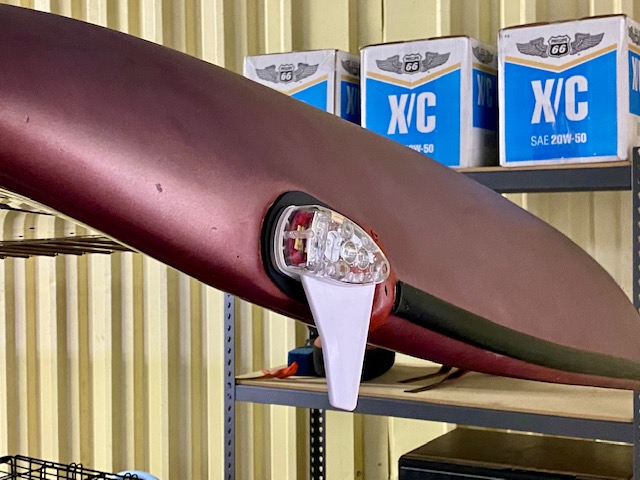
See anything that might concern you?
The skyBeacon phone app shows you something called NIC and NACp. Both of these values have to do with the GPS system. However, the app does not provide a means to monitor the satellites. How many and which it is locking on to. This feature can be found in all GPS systems. My car GPS has it. Even the Stratux low cost ADSB in device has it.
Why is it not supplied with the skyBeacon, then? How are we to know how well the device is receiving satellites if we cannot see them?
The ability to see and hold onto these GPS satellites is referred to as NIC and NACp by the FAA in their test.
In order to pass the flight test for the FAA you must have a 7 for NIC and a 9 for NACp and you must hold at least that value for most of the flight. You can have a drop out now and then but the more you drop lower than 7 and 9 the higher the percentage of failure you will incur on the test. The FAA allows some percentage but at some point they will fail you and for that you get the dreaded RED box. You have to clear the red completely or the FAA considers that flight a complete failure.
It has taken me months to get this skyBeacon to pass a single test with the FAA's PARP test program. In order for me to fly in rule airspace....that means, Mode C, A, B & C airspace and E airspace above 10,000'... I need to have a fully working ADSB out system.
Here is a portion of a sample of my flight test results up until last week.
https://i.postimg.cc/rm1wjvQr/test-2.jpg
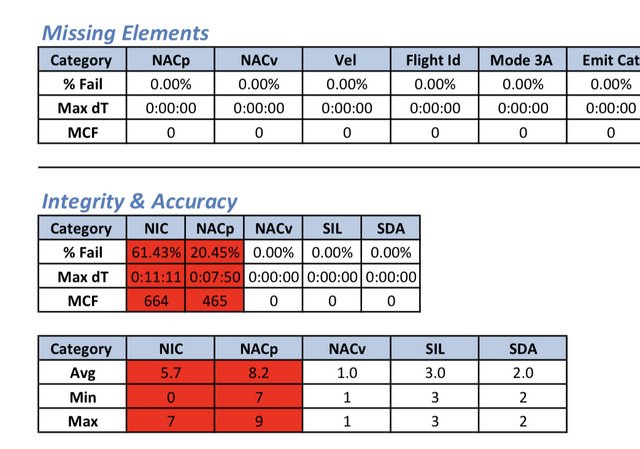
Note the Max for NIC and NACp is 7 and 9. They barely make the needed values on a good day.
Now, after working with an electrical engineer flying buddy of mine along with another flying buddy who is an avionics engineer we came up with a potential fix for the skyBeacon. At least for my plane, that is.
Take a look at these test results from this past Saturday after the fix as applied.
https://i.postimg.cc/sXd2pV9z/test-1.jpg
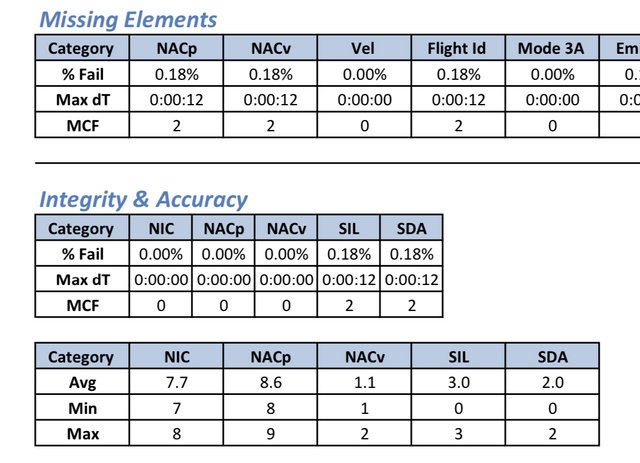
I've said my peace. Now it's up to skyBeacon to take care of business and address the failings of their poor design.
funflyingguy
Filing Flight Plan
so i have been encountering the same types of issues with my NIC and NACp for over a year now. uavionix replaced the skybeacon, but the issues continue. what was the 'fix' you came up with and applied to improve the integrity and positioning (NIC and NAC) ??
First, I emailed the FAA to get the detailed ground tracks for my PAPR flights. How? Here's the FAA's advice:so i have been encountering the same types of issues with my NIC and NACp for over a year now. uavionix replaced the skybeacon, but the issues continue. what was the 'fix' you came up with and applied to improve the integrity and positioning (NIC and NAC) ??
If you receive a PAPR with suspected false failure indications, please email [email protected] and request that your avionics performance be manually reviewed prior to taking maintenance action. Please attach the PAPR file and include "PAPR Review Request" in the subject line of the reply email to help expedite a response.
After receiving this file from the FAA, I opened it in Google Earth. All the points where it failed (NIC and NAC too low, dropped GPS) appear in RED. I realized they were precisely the spots where I was transmitting on the com radio. At first I thought, how is that possible? The com radio uses a frequency about 10x lower than GPS. The answer is harmonic distortion. Every radio has it, some more than others. I installed low-pass filters between the radio transmit jacks and the antenna cables. Problem solved - no more dropping NIC and NAC. You might also need one on your ELT.
I used TED 4-70 filters, not the Garmin ones, because the TEDs are steeper.